Free Fire Review: The Battle Royale That Still Runs Where Others Choke
Free Fire remains one of the world's biggest battle royales by prioritizing accessibility over technical spectacle. In 2026, we examine whether its lightweight design and fast-paced matches still make it the best choice for lower-end phones.
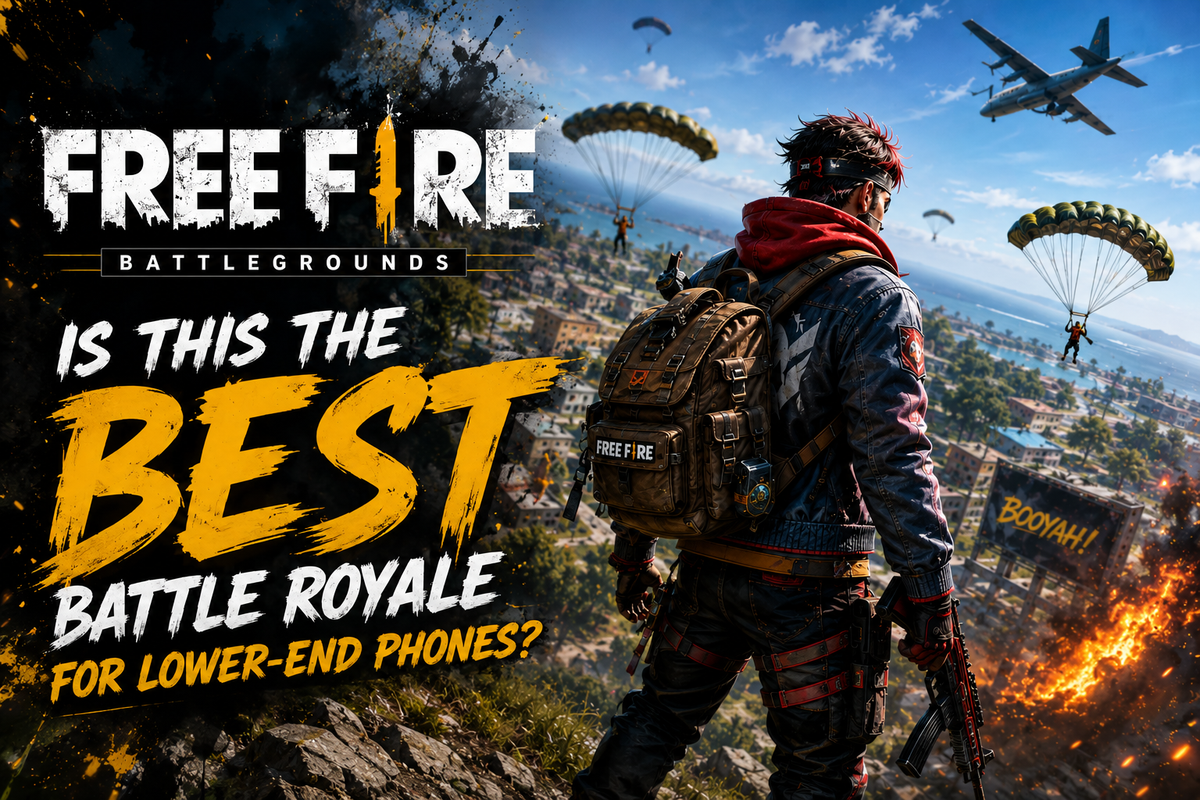
Is this the best battle royale for lower-end phones? For most players on budget Android hardware, yes. Not the prettiest, not the purest, but the one most honestly built around the phone in your hand.
There are battle royales that sell you scale. PUBG Mobile sells the dream of the long, tense military sandbox. Fortnite sells the whole cross-platform carnival. Call of Duty: Mobile sells the familiar crack of console-branded shooting in your pocket. Free Fire sells something less glamorous but more important in much of the world: it actually runs.
That sounds like faint praise until you remember where mobile gaming lives. Not in a lab with flagship chips and cooling clips, but on entry-level Android phones in Brazil, Indonesia, Pakistan, Nigeria, Egypt, the Philippines, Mexico, and a hundred other markets where a 10GB install can be a dealbreaker and battery percentage is a resource. Free Fire’s official minimum Android spec is still startlingly low: Android 4.4, a dual-core 1.2GHz CPU, 1GB RAM, and 1.5GB of storage, with Garena recommending 3GB RAM and 3GB storage for good performance.
A Battle Royale Built for the Bus Ride
Free Fire’s smartest design choice remains its shape. A standard battle royale match drops you against 49 other players and aims to wrap the whole thing in roughly 10 minutes. Garena’s own store copy frames it exactly that way: 10-minute games, 49 opponents, quick survival, quick reset. That is not just a pacing gimmick. It is the whole product philosophy.
On a lower-end phone, long matches are risky. Your device heats up. Touch response gets sloppy. Battery drain accelerates. Network hiccups become more likely. Free Fire dodges some of that by making the arc shorter and denser. You loot faster. You rotate sooner. You fight earlier. You die, complain, and queue again before PUBG Mobile has finished asking you to decide whether that distant muzzle flash is worth a 600-meter detour.
The result is a battle royale that feels compressed rather than shrunken. The map design is simpler, the sightlines are less believable, and the world has that old mobile-game plastic sheen, but the format suits weaker hardware. Free Fire is at its best when played in scraps of time, with a warm phone, a mediocre connection, and a thumb that has learned the layout by muscle memory.
Performance First, Beauty Somewhere Later
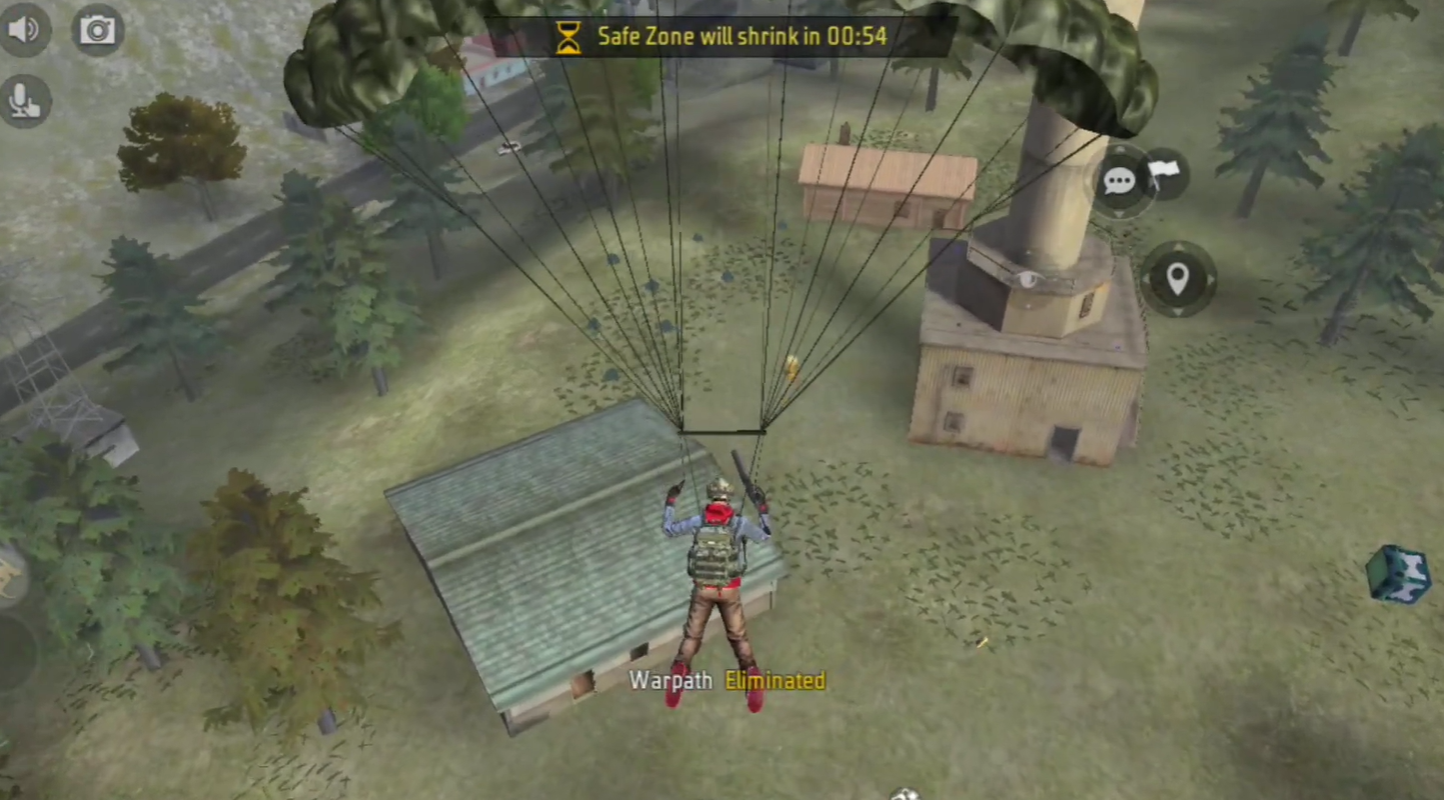
Let’s not pretend Free Fire is a looker. Even with years of updates, it still carries the visual DNA of a 2017 mobile shooter: chunky character models, flat terrain, busy UI, and effects that often read more like stickers than atmosphere. Free Fire MAX exists for players who want the upgraded presentation, but the original game’s advantage is precisely that it does not chase visual parity with its rivals.
That matters because the competition has gotten heavy. PUBG Mobile’s own site lists a 1.3GB APK download, and its store descriptions still sell 100-player Classic Mode battles. Call of Duty: Mobile officially asks for at least 2GB RAM on Android and includes a 100-player battle royale mode, plus multiplayer, Zombies, seasonal content, and a lot of optional assets waiting to eat storage. Fortnite is in another class entirely: Epic’s Android requirements call for 64-bit Android 10 or higher, 4GB RAM, and specific Adreno or Mali GPUs.
Then there is Warzone Mobile, the clearest warning against confusing ambition with fit. Activision removed it from app stores in May 2025, stopped new seasonal content and gameplay updates, and shut the servers down on April 17, 2026, saying it had not met expectations with mobile-first players. For this review’s central question, that is almost too perfect a footnote: Free Fire understood the mobile-first audience better than one of the biggest shooter brands in the world.
The Gunplay: Fast, Forgiving, Sometimes Too Loose
Free Fire’s shooting is not elegant in the PUBG sense. Recoil is readable but rarely intimidating. Aim assist is generous. Weapons have personality, but not the layered ballistic identity that makes a great PUBG duel feel like a tiny physics exam. If you are coming from a premium shooter, Free Fire’s gunfights can feel sticky, abrupt, and slightly weightless.
On a low-end phone, though, that forgiveness is a feature. When your frame rate wobbles, the game’s broad hit readability and short time-to-kill keep fights from becoming pure hardware punishment. You can still flank, pre-aim, throw a Gloo Wall, force a close-range panic, and win. The best Free Fire fights are not long-range tactical poems. They are messy, close, improvised bursts of aggression where positioning and nerve matter more than whether your phone can render grass at distance.
Gloo Walls remain the game’s great equalizer. They give Free Fire a tactical signature that is cheap to understand and hard to master: instant cover, emergency reset, push tool, bait, mistake-corrector. At high levels, wall placement becomes its own language. At low levels, it gives new players a way to survive the first bad rotation.
Characters and Abilities: Personality With Baggage
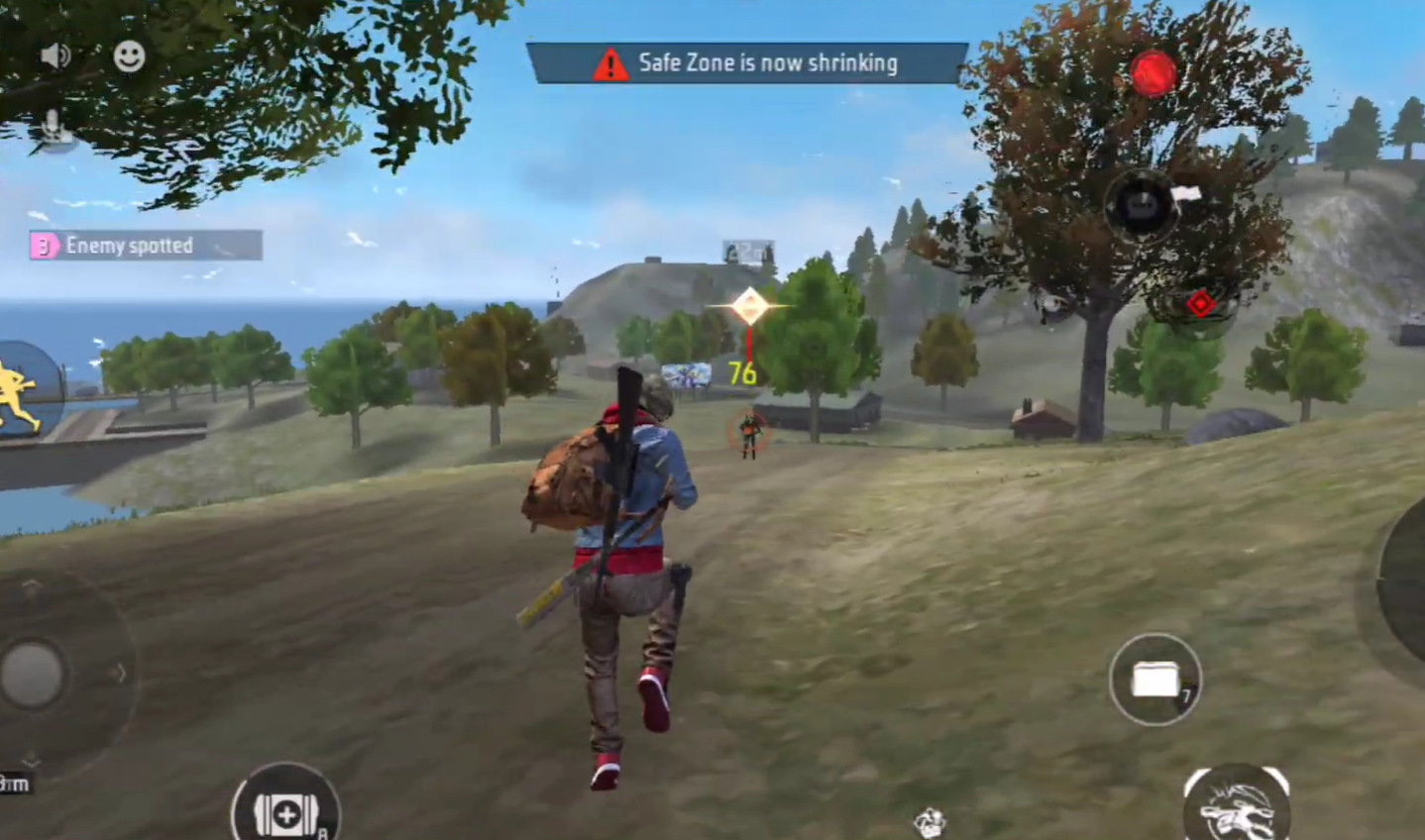
Free Fire’s character system is both one of its hooks and one of its messier compromises. Abilities add identity to a genre that can otherwise flatten everyone into a helmet, vest, and rifle. They also make the game more legible on weaker devices. When visibility, frame rate, and touch precision are not perfect, having abilities that support healing, mobility, information, or aggression gives players more ways to express skill than raw aim.
The downside is clutter. Free Fire has accumulated years of characters, pets, skill combinations, currencies, upgrade paths, and event rewards. To a returning player, the lobby can feel like opening a shopping mall during a fireworks show. To a new player, it can be hard to tell what matters and what is just another limited-time costume trying to hijack your attention.
This also feeds the game’s biggest recurring criticism: monetization. Free Fire is free-to-play in the modern mobile sense, which means generous access wrapped in relentless temptation. Skins, bundles, spins, event stores, top-up rewards, limited cosmetics, and character-adjacent progression all compete for your eyes. A disciplined player can have a good time without paying. A younger or more impulsive player is going to be nudged constantly.
Bots, Skill Ceiling, and the Cost of Accessibility
Accessibility has a price. Early and lower-rank lobbies can feel bot-heavy, sometimes to the point where your first victories arrive with suspicious ease. That is good onboarding and bad drama. Free Fire wants you to feel capable quickly, but too many soft targets can dull the danger that battle royale needs.
The skill ceiling is real, especially around movement, Gloo Walls, close-range shotguns, rotations, and squad coordination. Still, it is not the same ceiling as PUBG Mobile’s methodical realism or Fortnite’s absurd build-and-edit dexterity. Free Fire’s ceiling is twitchier, scrappier, and more meta-driven. That makes it more welcoming, but also more chaotic. Some players will read that as energy. Others will read it as noise.
Still Alive, Still Loud
The most impressive thing about Free Fire is not that it became huge. It is that it stayed huge. Garena describes Free Fire as the most downloaded mobile game in its genre for seven consecutive years, and the game’s live calendar remains busy with updates, seasonal events, and crossovers. Recent official beats include the football-themed Fire Kickoff campaign in June 2026, a GINTAMA collaboration in April and May 2026, and the Undersea Mystery update with new mechanics and a new character.
That live-service health matters for low-end players. A game can run beautifully and still be dead. Free Fire is not dead. It is overstuffed, loud, aggressively commercial, and sometimes tacky, but it is alive in the way the best mobile hits are alive: events everywhere, rewards everywhere, squads always forming.
Verdict
So, is Free Fire the best battle royale for lower-end phones?
Yes, with an asterisk big enough to parachute onto.
It is not the best-looking battle royale. It is not the most precise shooter. It is not the fairest-feeling free-to-play economy. If you have a strong phone, plenty of storage, and want deeper gun handling, PUBG Mobile or Call of Duty: Mobile may satisfy you more. If you want the full cross-platform spectacle and your device meets the bar, Fortnite is still Fortnite.
But on entry-level Android hardware, Free Fire is the battle royale that makes the fewest apologies for your phone. Its short matches, 50-player structure, lightweight footprint, forgiving shooting, and tireless live-service machine make it feel purpose-built for the mobile-first world rather than squeezed onto it.
Score: 8/10
Best for: players on budget phones who want fast, social, reliable battle royale matches.
Skip if: you need premium visuals, grounded gunplay, or a less aggressive free-to-play economy.